When winter storms blanket the Northeast, commercial building owners face a critical question: how much snow can your flat roof safely handle? At Vanguard Roofing, we’ve seen firsthand how snow accumulation can quickly shift from a minor inconvenience to a serious structural concern. Learning the warning signs and knowing when to act protects your building, your investment, and everyone inside.
Can Snow Damage Your Flat Roof?
Absolutely. Snow on a flat roof creates unique challenges that pitched roofs simply don’t face. The weight accumulates rather than sliding off, and when temperatures fluctuate, that snow can turn into dense ice. A cubic foot of fresh snow can weigh around 3–7 pounds, while wet, compacted snow can weigh 15–25 pounds. Ice weighs about 57 lbs per cubic foot. That’s a massive load for any roof system to bear, especially when snow piles up over days or weeks without melting.


The real danger isn’t just the weight. Poor drainage makes the problem worse. When snow melts during the day and refreezes at night, it can block drainage and create standing water. This freeze-thaw cycle weakens membrane seams. It accelerates deterioration and can lead to leaks that damage your interior and inventory.
Warning Signs Your Roof Is Under Stress
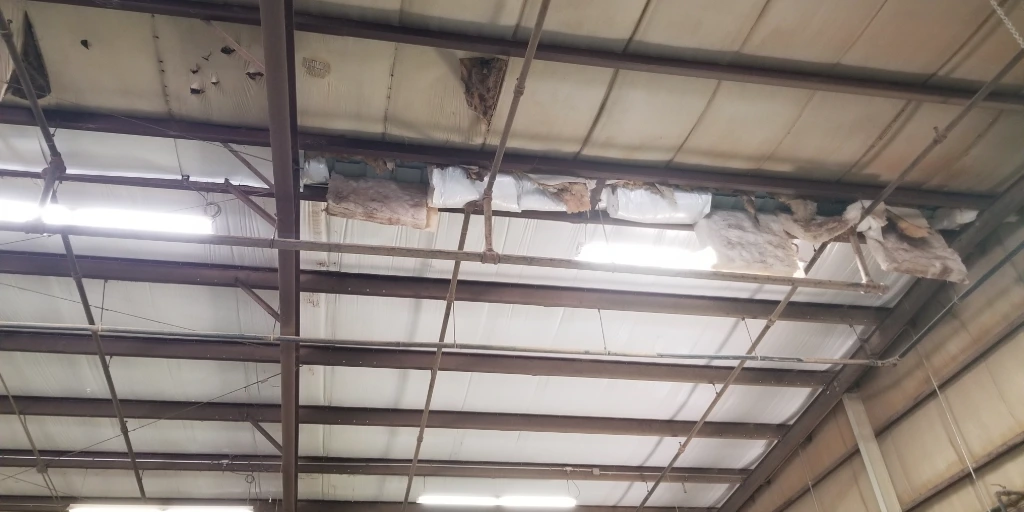
Your building will tell you when it’s struggling under a heavy snow load. Listen for creaking or popping sounds in the structure. Watch for doors that suddenly stick or won’t close properly. Look for cracks appearing in interior walls or ceilings, especially near support beams. Sagging ceiling tiles or visible movement in roof decking means you need professional help immediately. Water leaks, especially in new areas, may indicate possible ice dams or compromised roof seams.
Water stains on interior surfaces mean melting snow has gotten through your roof. Don’t wait to act. What starts as a small leak can quickly become serious water damage. Repairs may then go far beyond simple roof work.
Safe Snow Removal Strategies
Pre-winter inspections and having a snow removal plan improve safety and preparedness for winter snowstorms. This plan should include mapping roof drains, areas where heavy snow could accumulate, rooftop equipment, and penetrations. Installing temporary snow flags for drains is an excellent idea for the winter season.
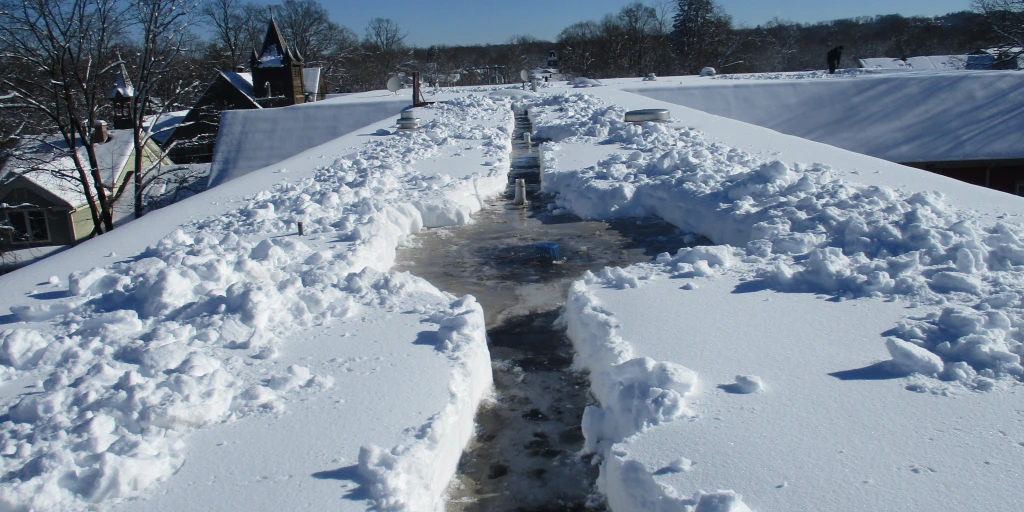
Safety is paramount in removing snow from a flat roof, and requires careful planning and execution. Using safety equipment is necessary because the roof surface is slippery when wet. Never attempt this alone, and never use sharp tools like shovels that can puncture your roofing membrane. Professional roof rakes with plastic edges protect your roof surface while clearing snow effectively and efficiently. Work from the perimeter inward, and always leave a few inches of snow on the surface rather than scraping down to the membrane. Beware of drifting areas, especially in valleys on metal roofs, and around roof equipment.

Most building owners should call in professionals for snow removal. We have the right equipment, safety training, and insurance to handle the job properly. Hiring professionals for removal costs far less than repairing structural issues or addressing a potential roof collapse.
Preventing Ice Dams and Water Pooling
Ice dams on flat roofs form when heat melts snow from below. Melted water runs to colder roof edges and refreezes. This creates a dam that traps more water. Standing water finds every weak point in your membrane.
Prevention starts with proper insulation and ventilation. Your building’s heat should stay inside, not escape through the roof. Regular maintenance keeps drainage systems clear so meltwater can flow freely off your roof. We partner with building owners to identify these vulnerabilities before winter arrives, eliminating problems before they start.
When to Call the Professionals
Contact a qualified commercial roofing contractor if you notice visible sagging, see interior warning signs, or have more than 12-20 inches of accumulated snow, depending on the snow type and building design. Don’t wait for a leak to develop. Once water penetrates your building, repair costs multiply rapidly.
Vanguard Roofing has served the Northeast since 1972, giving us deep experience with the region’s harsh winters. We understand snow load calculations, proper removal techniques, and how to identify potential problems before they become emergencies. Contact us today to schedule an inspection or receive a free quote. Preparing your commercial roof properly for winter isn’t just our approach—it’s the smartest investment you can make to protect your building.