
Winter can be tough on commercial buildings across the Northeast. As a property owner or facility manager, you might think waiting to remove snow from your roof saves time and money. The reality is quite different. Vanguard Roofing has witnessed the costly consequences of delayed snow removal throughout our 50+ years serving commercial properties in New York, New Jersey, Connecticut, and Massachusetts. Understanding when and why to act quickly protects your building, your budget, and your peace of mind.
How Much Snow Is Too Much for a Flat Roof?
The answer depends on your roof’s structural capacity and the type of snow accumulation. Most commercial flat roofs are designed to handle 20-30 pounds per square foot, but wet snow weighs significantly more than fresh powder. A foot of fresh snow typically weighs 5-7 pounds per square foot, while the same depth of wet snow can reach 12-20 pounds. Add ice layers, and you’re looking at 30-60 pounds per square foot. Your building’s age, design specifications, and existing roof condition all factor into the equation. Older structures may have lower weight tolerances than newer construction.
When Should You Remove Snow From Your Commercial Roof?
Plan removal when 6-12 inches of snow collects on flat or low-slope roofs. Don’t wait for sagging, cracks, or leaks—those signs mean you’re already in danger. Listen for creaking, popping, or settling sounds indicating structural stress. Monitor winter forecasts; if another storm is expected before melting, removal is critical, even with moderate accumulation.
Check for These Warning Signs
Water stains on interior ceilings mean melting snow is finding entry points through your roofing system. Doors and windows that suddenly stick or won’t close properly suggest that your building frame is shifting under its own weight. Sprinkler heads that hang lower than normal indicate ceiling deflection. Cracks appearing in interior walls or ceilings are red flags that shouldn’t be ignored.
How Quickly Does Snow Need to Be Removed After a Storm?
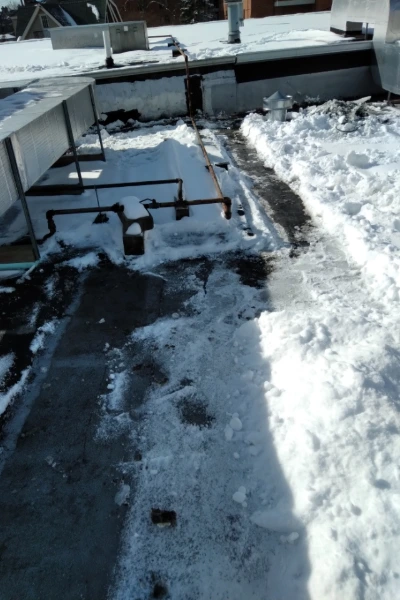
Time is critical. Heavy wet snow left for days creates ice dams and sustained pressure. Each freeze-thaw cycle adds weight and risk of infiltration. Schedule removal within 24-48 hours after a major storm—this prevents most ice formation and keeps removal straightforward. Waiting a week or more makes the job more complex and costly.
Can You Wait Until Spring Thaw to Remove Snow?
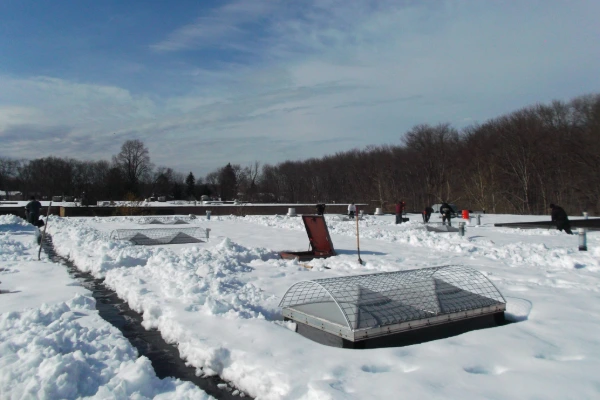
This approach is risky and often more expensive than proactive removal. Spring thaw doesn’t happen evenly across your roof surface. Southern exposures may clear while northern sections remain packed with snow and ice. The melting process creates standing water that tests every seam, penetration, and vulnerable spot in your roofing membrane. TPO and EPDM roofs are designed to shed water quickly, but they’re not intended to function as swimming pools. Metal roofing systems handle standing water better than membrane systems, but even metal roofs suffer when meltwater refreezes at night and expands in small gaps.
The Hidden Costs of Waiting
Water damage to inventory, equipment, or interior finishes typically costs far more than professional snow removal. Business interruptions from emergency repairs affect your revenue and reputation. Insurance claims may be denied if you failed to maintain your roof properly during winter months.
How Does Northeast Weather Affect Snow Removal Needs?
The Northeast’s unique climate demands specific strategies. Heavy wet snow compacts quickly under its own weight. Rapid temperature swings create freeze-thaw cycles that turn snow into solid ice overnight. Coastal areas face nor’easters that can dump several feet of snow in a single event, overwhelming unprepared roofing systems.
Connecticut and Massachusetts properties often face multiple moderate storms rather than single large events. This pattern creates layered accumulation where each storm adds to the existing load. New York and New Jersey buildings face a distinct challenge: the hazardous combination of heavy snowfall and ice storms. When snow melts during the day and refreezes at night, it transforms into solid ice that dramatically increases your roof’s load.
The Real Damage Ice Causes
The consequences are significant. This extra weight stresses roof decks beyond their design limits. Ice storms force water into seams, flashing, fasteners, and membrane laps. As water freezes and expands, it pulls materials apart, creating hidden weaknesses that lead to leaks months later. Ice also blocks your roof’s drainage system. Flat roofs rely on drains and scuppers to shed water quickly, but ice buildup blocks these outlets, causing ponding water that accelerates membrane deterioration and increases the risk of leaks.
Where Ice Hits Hardest
Flashings and penetrations take the biggest hit during freeze-thaw cycles. Ice buildup around HVAC units, vents, skylights, and parapet walls cracks sealants and loosens flashing. These are the most common failure points on commercial roofs, and winter weather exploits every vulnerability.
Do Metal Roofs Handle Snow Differently Than TPO or EPDM?
Yes, material type significantly impacts how your roof responds to snow loads. Metal roofs often let snow slide off more easily, reducing buildup but creating safety risks below. Ponding still occurs at seams or fasteners. Standing seam metal roofs perform better than corrugated ones. TPO and EPDM membranes hold more snow due to surface friction, requiring more active removal but offering control over release timing.
Both membrane types are flexible and can handle freeze-thaw cycles well when properly installed and maintained. Metal systems are rigid and expand or contract with temperature changes. Neither system is inherently better in snow, but each requires specific removal techniques to avoid damage.
Material-Specific Considerations
EPDM’s dark surface absorbs solar heat and may promote faster melting on sunny days. TPO’s lighter color reflects sunlight and keeps snow frozen longer. Metal roofing contractors often install snow guards or retention systems to control how snow releases from the roof surface.
Should You Remove Snow After Every Storm or Wait?
The decision depends on storm frequency, accumulation rate, and current snow load. Single storms dropping 6-8 inches on an otherwise clear roof rarely require immediate removal. However, three moderate storms in two weeks create a cumulative load that demands attention. Monitor total depth rather than individual storm amounts. A pattern of storms with no melting between events is your signal to schedule removal. Weekly inspections during active winter weather help you make informed decisions.
Professional commercial roofing contractors bring the expertise and equipment needed to remove snow safely without damaging your roof membrane, flashing, or drainage components. Vanguard Roofing’s winter roof maintenance services protect your investment year-round.
Contact Vanguard Roofing today to discuss your winter maintenance plan and protect your property from costly snow-related damage.