When a manufacturing or warehouse roof fails, every moment counts. At Vanguard Roofing, we’ve seen that emergency industrial roof repair is a unique field that requires a production-focused mindset, expertise with specialized materials, and the ability to conduct large-scale assessments without halting operations.
In industrial settings, the stakes include exposed machinery, regulatory risk, structural threats, and production losses that can far exceed repair costs. Knowing why industrial facilities need a different approach (and what that is) can mean the difference between a minor incident and a full-blown crisis.
Why Industrial Emergencies Are Different From Standard Commercial Roof Failures
Most people picture a roof emergency as a leak that needs patching. In a retail space or office building, that’s largely accurate. In a manufacturing or warehouse facility, the priorities are more complex from the first moment water breaches the envelope.
The sheer scale of industrial roofing, often hundreds of thousands of square feet, means that a single point of failure can produce water intrusion at a location far removed from the actual damage. Add heavy machinery, electrical systems, and, in some cases, regulated production environments, and you have a situation where a one-size-fits-all response won’t cut it. Emergency industrial roof repair requires an assessment framework built around the facility’s operations, not just the roof’s surface condition.
The Production-First Assessment: What It Means and Why It Matters
Equipment Vulnerability Comes First
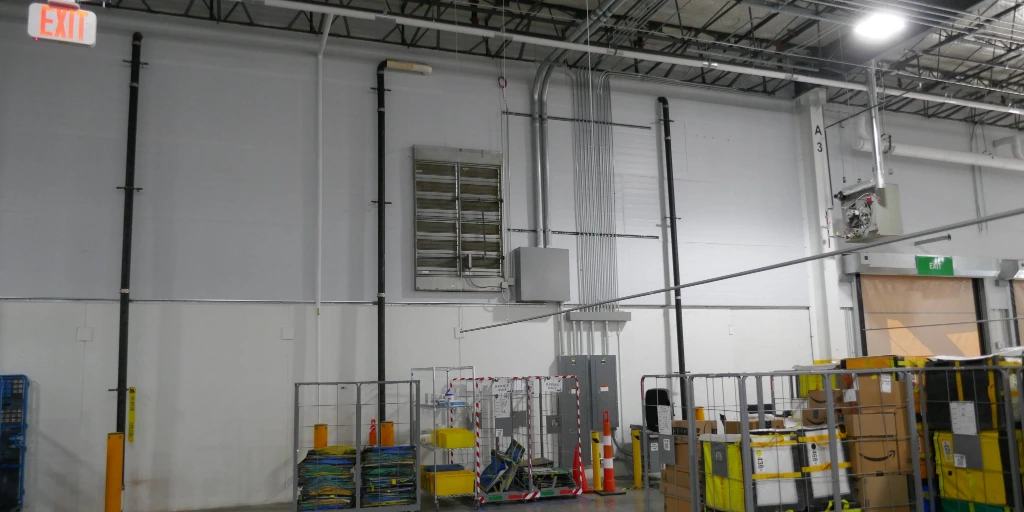
Before any repair crew gets on the roof, someone needs to answer a critical question: what’s directly at risk below the breach? A leak over a high-value CNC machine, a high-voltage electrical panel, or a server room creates immediate safety and financial exposure that shapes every decision that follows. The repair timeline, temporary protective measures, and work sequencing all depend on what’s underneath.
Contamination Risk in Regulated Environments
Food-grade and pharmaceutical manufacturing facilities operate under FDA regulations that treat the building envelope as part of the compliance structure. Even a small breach that might be considered a minor inconvenience in another setting can trigger a contamination concern serious enough to halt production and require remediation. Emergency responders working in these environments need to understand those stakes before they start.
Structural Load Considerations
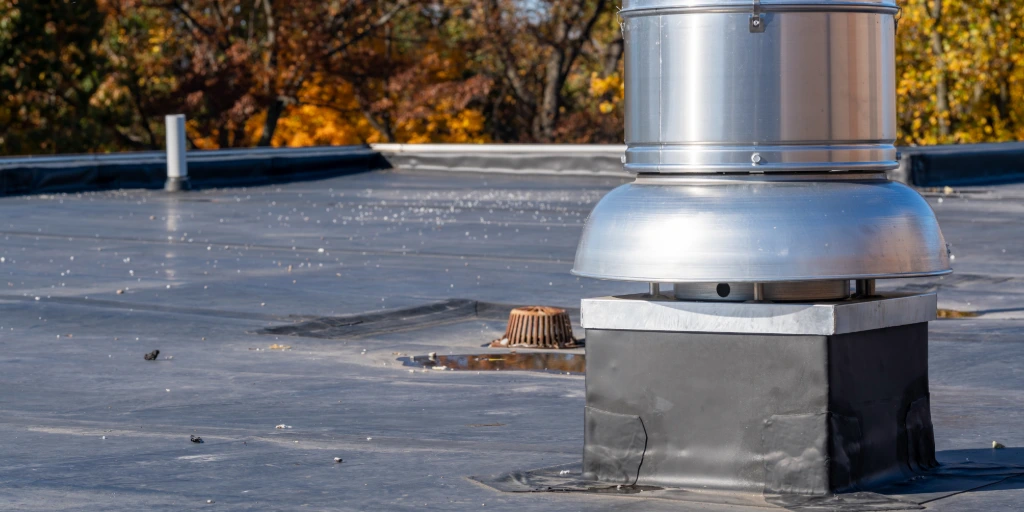
Large industrial roofs, especially those carrying heavy HVAC units or exhaust systems, face drainage dynamics that standard commercial roofs don’t. During a significant storm, drainage failures on a large flat industrial roof can create ponding that adds substantial structural load. An experienced emergency assessment accounts for this: not just where the water is coming in, but where it’s accumulating and what that means for the deck below.
TPO vs. Metal Roofing: Emergency Repair Isn’t One-Size-Fits-All
Emergency Repairs on TPO Systems
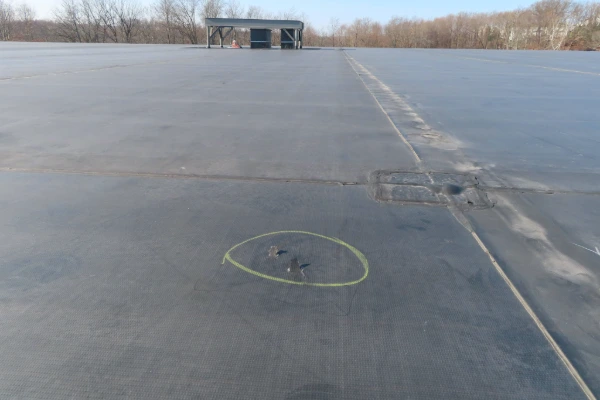
Thermoplastic Polyolefin (TPO) membranes are among the most common roofing systems found on warehouses and distribution facilities. Under normal conditions, TPO is repaired using heat-welded patches, a reliable, long-lasting method. In an emergency, however, wet or damp membrane surfaces make heat welding impractical. Technicians instead turn to specialized mastic compounds or peel-and-stick TPO tapes as temporary measures to stop active water infiltration until conditions allow for a permanent repair.
Emergency Repairs on Metal Roofing Systems
Standing seam metal roofs are made to withstand the thermal expansion and contraction common in large industrial spans — a phenomenon sometimes called thermal shock. In an emergency, damage typically shows up at the seams or around fasteners. Repair technicians use high-solids silicone coatings or butyl tape systems specifically formulated to flex with the metal as temperatures change. Using the wrong material here can make the problem worse, not better.
Assessing Damage at Scale: The Logistics of a 500,000 Square Foot Roof
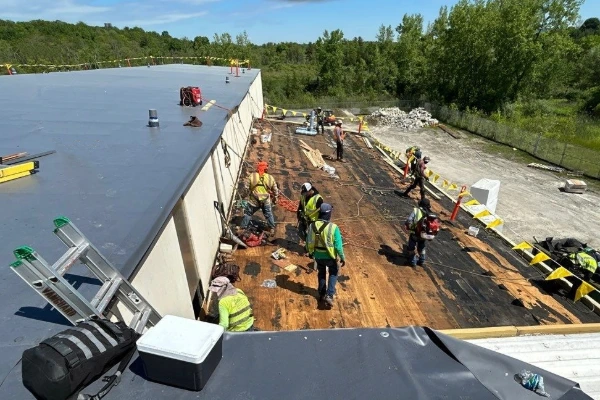
A ladder and a flashlight aren’t going to get the job done when you’re looking at a facility roof measured in acres. Emergency industrial roof repair requires tools and techniques calibrated to that scale.
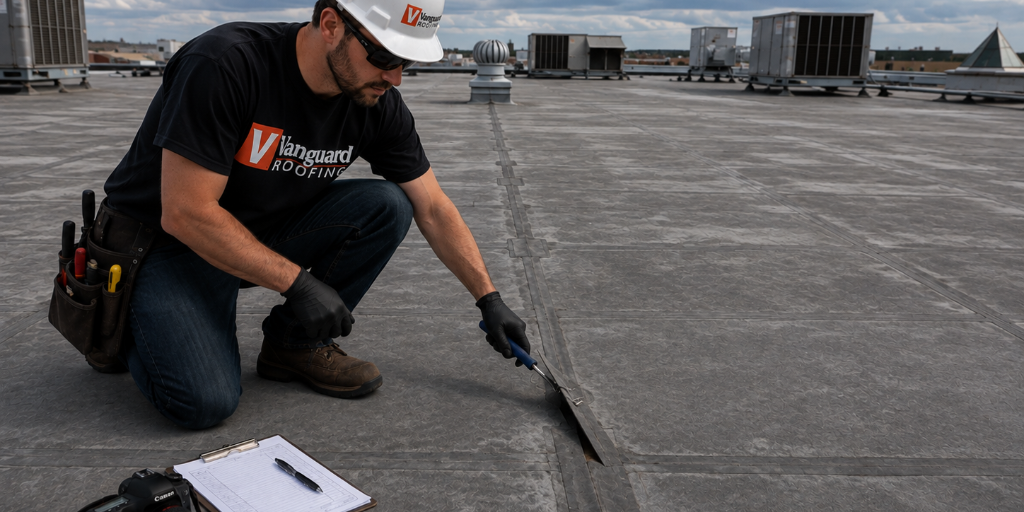
Infrared technology has become a critical part of large-scale damage assessment. Thermal imaging identifies moisture trapped beneath the membrane that isn’t visible from the surface — moisture that, if left unaddressed, accelerates insulation degradation and structural decay. Interior scoping is equally important. Because of deck pitch and the way water travels through a building’s structure, the point where water drips inside is often 30 to 50 feet away from the actual roof breach. Chasing the interior symptom without a coordinated exterior assessment wastes time and misses the real problem.
Keeping Production Running During Emergency Repairs
Internal Diversion Systems
When a repair can’t happen immediately, or when work must occur during operating hours, facility managers need ways to protect what’s underneath the damaged area. Heavy-duty leak diverters and interior containment systems can channel active water infiltration away from machinery, electrical equipment, and product inventory while crews work above. This isn’t a permanent solution, but it’s a critical bridge measure that keeps operations viable while the repair is staged.
Coordinating Around Shift Schedules and Facility Equipment
Industrial facilities often operate cranes, forklifts, and other heavy equipment, creating safety conflicts with overhead roofing work. Effective emergency planning includes coordinating with facility operations to schedule the most intensive repair work during shift changes, planned downtime, or other windows where the work above and the activity below don’t create hazards for either crew.
The Insurance Gap Industrial Facility Owners Need to Know About
One of the most underappreciated aspects of industrial roof emergencies is the gap between what standard emergency repair coverage addresses and what the actual cost of an incident looks like.
The repair itself is often the smallest line item. Business interruption (the cost of halted production, missed shipments, and idled workforce) can dwarf the roofing bill within days. In facilities handling chemicals, cleanroom manufacturing, or other regulated processes, a roof breach that leads to environmental contamination or compromised facility integrity can trigger remediation costs that run into the hundreds of thousands of dollars. Understanding your policy’s language around emergency repairs, business interruption, and environmental compliance before an incident occurs is essential. When an emergency happens is the wrong time to discover your coverage has gaps.
Build Your Emergency Response Plan Before You Need It
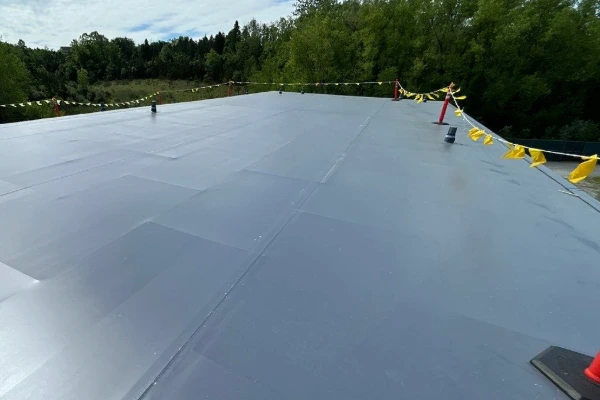
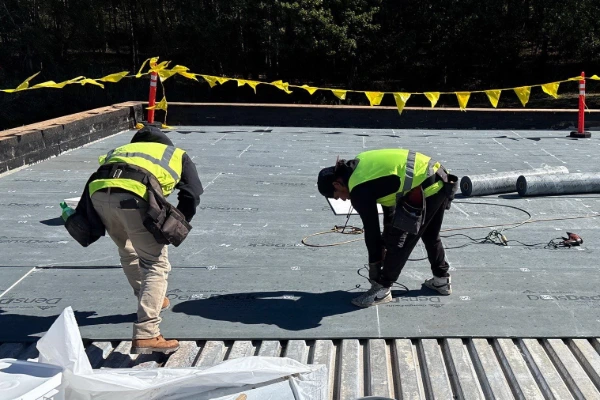
The facility managers who handle industrial roof emergencies best share one common trait: they’ve already thought through the response before anything goes wrong. That means knowing which roofing contractor you’re calling, having a site contact available around the clock, and understanding which areas of your facility are most vulnerable given your roof system type and age.
At Vanguard Roofing, we’ve been partnering with manufacturing and warehouse facilities across southeast New York, northeast New Jersey, Connecticut, and Massachusetts since 1972. Our team understands the demands of industrial emergency roofing — from production-first triage to large-scale damage assessment and system-specific repairs. When the call comes in, we’re ready.
Contact Vanguard Roofing today to discuss emergency roof services for your industrial facility.