At Vanguard Roofing, we’ve seen how a small, unnoticed roof leak can spread water through insulation, structural materials, and electrical systems—quickly turning a minor repair into a major expense. Roof leak warning signs aren’t always obvious from the outside, which makes them dangerous. If you own or manage a commercial building, spotting these signs early can protect your investment, tenants, and bottom line. This guide outlines key warnings to help you act early and avoid costly repairs.
Early Warning Signs of a Commercial Roof Leak
Early warning signs of a leak rarely appear on the roof. More often, they show up inside—on ceilings, walls, and around mechanical systems. Staining, discoloration, or soft spots on ceiling tiles are key clues that water is getting in. A musty odor in certain areas also suggests moisture behind walls or above ceilings. Spotting these signs early limits damage and keeps repair costs down.
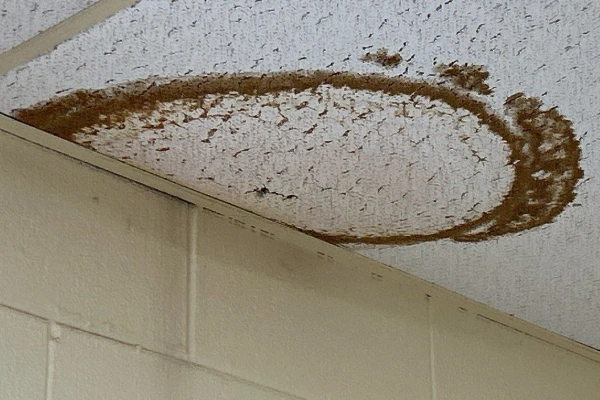
Ceiling Stains and Water Marks
Brown or yellow stains on ceiling tiles or drywall are clear signs of a roof leak. These stains form when water seeps through the roofing and drips onto the interior. Even if the stain looks dry, damage above it may still be active.
Sagging Ceiling Panels
A sagging or bowed ceiling is a serious warning sign, often indicating that water has collected above it. Ignoring this can lead to ceiling collapse and major interior damage.
Bubbling or Peeling Paint
When moisture becomes trapped beneath paint or interior wall coatings, it can cause bubbling, cracking, or peeling. This is especially common near roof edges, skylights, and HVAC penetrations where water tends to pool or travel.
Why Your Ceiling Is Stained But the Roof Looks Fine From the Outside
This is one of the most common and frustrating situations for building owners. You walk on the roof and don’t see a single crack, tear, or obvious problem, yet there are water stains on your ceiling tiles. The reason comes down to how flat and low-slope roofs behave. Water doesn’t always leak straight down. It can travel along decking, insulation layers, or membrane seams before finding a path through the structure. By the time it shows up on your ceiling, the entry point may be several feet away. This is why commercial roof leak signs on the interior don’t always line up with what you see on the exterior.
How to Know If Water Damage Is Coming From the Roof
Not every instance of ceiling moisture means your roof is leaking. Water intrusion can also come from HVAC condensation, plumbing lines, windows, or wall penetrations. To isolate the source, start by ruling out nearby mechanical systems and plumbing. If the staining or moisture follows rainfall patterns—getting worse after heavy rain—the roof is likely the source. A professional commercial roof inspection can pinpoint the origin with far more accuracy than a visual walkthrough alone.
Signs That Point Specifically to the Roof
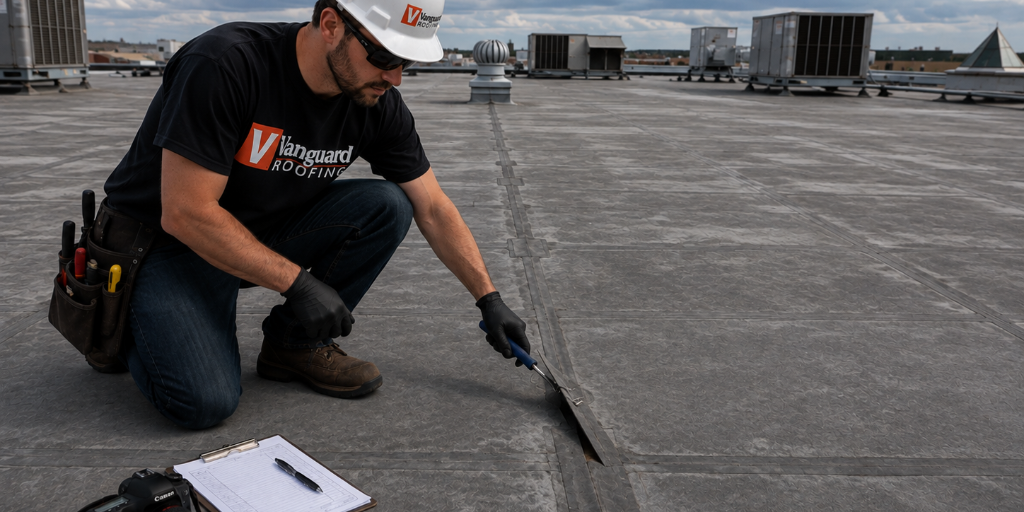
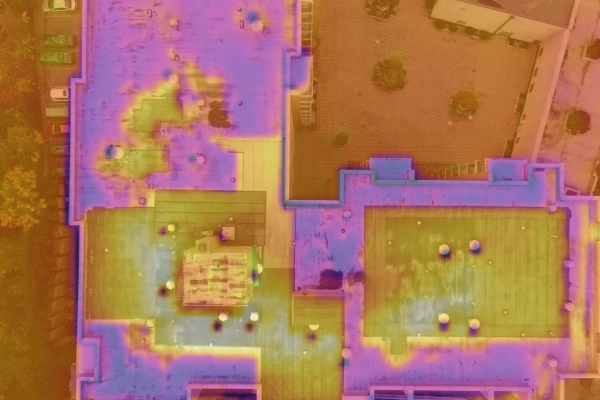
Water intrusion that follows storm activity, appears near roof drains or skylights, or shows up directly below known roof penetrations, such as HVAC curbs or pipe flashings, is a strong indicator that the roof is the source. Thermal imaging and moisture scanning are tools roofing professionals use during flat roof leak detection to confirm where water is entering.
Can a Commercial Roof Leak Without Visible Damage?
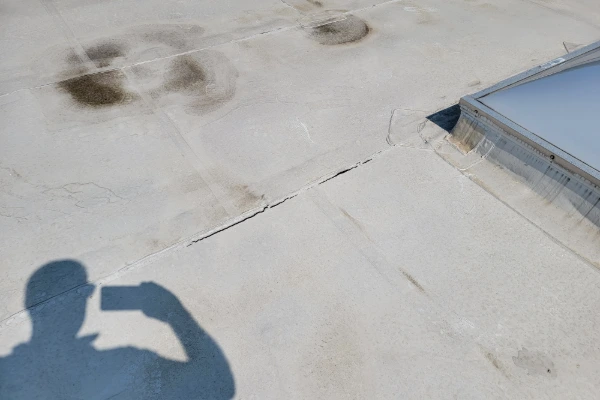
Yes—and this happens more often than most people expect. Roofing membranes can develop pinhole punctures, seam separations, or flashing failures that are nearly impossible to spot during a basic visual inspection. Foot traffic from HVAC technicians, debris accumulation, and thermal expansion over time can all cause damage that isn’t visible to the untrained eye. This is one of the strongest arguments for scheduled commercial roof inspections. A roofing contractor with the right equipment can identify vulnerabilities long before they become active leaks.
What Happens If a Commercial Roof Leak Goes Undetected
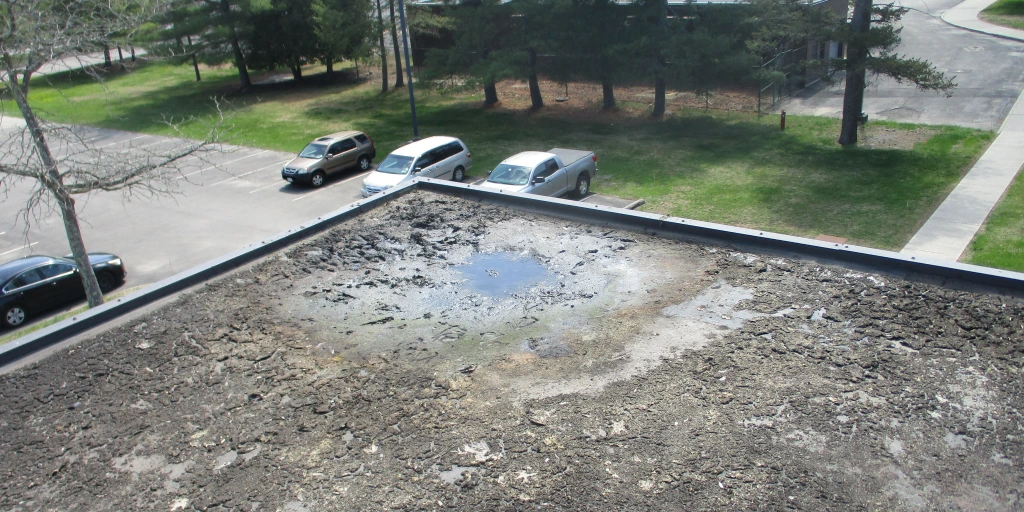
The consequences of an undetected roof leak grow quickly. Water that penetrates the roof membrane begins to saturate the insulation layer, reducing its thermal performance and adding significant weight to the roof deck. Over time, that moisture reaches structural components, leading to rot, rust, or concrete degradation depending on the building’s construction. Mold growth is another serious concern. Once mold establishes itself in a commercial building, remediation is expensive and disruptive to operations. Beyond the structural risks, a leaking roof can damage inventory, equipment, and tenant property, exposing building owners to liability.
Long-Term Cost of Ignoring Roof Leak Warning Signs
Delaying action on commercial roof water damage signs is rarely the most affordable option. A roof that could have been repaired for a few thousand dollars early in the damage cycle can require a full roof replacement if deterioration is allowed to spread. Proactive maintenance and early detection protect your long-term investment.
How Often Should a Commercial Roof Be Inspected for Leaks?
Most roofing professionals recommend at least 2 inspections per year: once in the spring and once in the fall. These seasonal inspections catch damage caused by winter freeze-thaw cycles or summer heat expansion before it can develop into a full leak. In addition to scheduled inspections, a roof should be checked after any major storm event, after HVAC service visits, and whenever interior signs of moisture appear. For buildings with older roofing systems or known problem areas, more frequent inspections may be warranted.
Building a Proactive Roof Maintenance Plan
A regular commercial roof maintenance plan is one of the most cost-effective things a building owner can do. Routine inspections, drain cleaning, membrane checks, and flashing reviews keep small issues from becoming expensive repairs. Many commercial roofing contractors offer maintenance programs designed to keep your roof performing properly year-round.
Contact Vanguard Roofing Today
Don’t wait until a small leak becomes a major problem. If you spot warning signs like stains, moisture, bubbling, or drainage issues, have a professional inspect your roof. Contact Vanguard Roofing to schedule an inspection or request a free quote. We serve building owners and facility managers in Connecticut, Massachusetts, New Jersey, and New York with reliable, high-quality roofing solutions.