When a commercial roof emergency occurs, property managers need clear answers, fast response, and dependable expertise. Whether it’s a sudden roof leak during a rain or snow storm or damage caused by heavy snow loads, understanding what to expect during emergency commercial roof repair helps minimize downtime, protect building assets, and support insurance claims.
With over 50 years of experience serving commercial properties across New York, New Jersey, Connecticut, and Massachusetts, Vanguard Roofing has responded to thousands of roofing emergencies in challenging Northeast conditions. This guide explains how emergency commercial roof repairs work—from the moment damage is discovered through temporary mitigation and permanent restoration—so you can make informed decisions when time matters most.
What Qualifies as a Commercial Roofing Emergency?
Not all roofing issues require immediate attention. A true roofing emergency involves conditions that pose an active risk to the building, occupants, or operations.
Common commercial roof emergencies include:
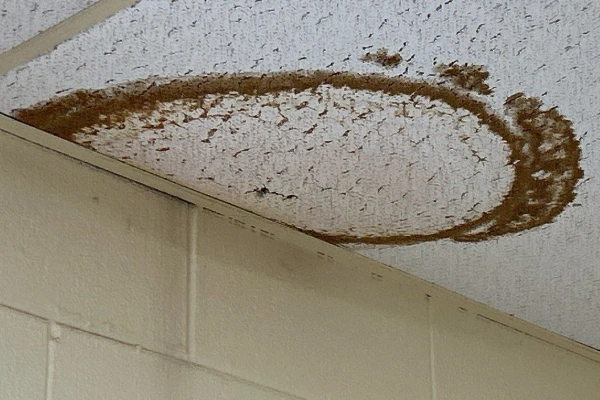
- Active water infiltration during rain or snowmelt
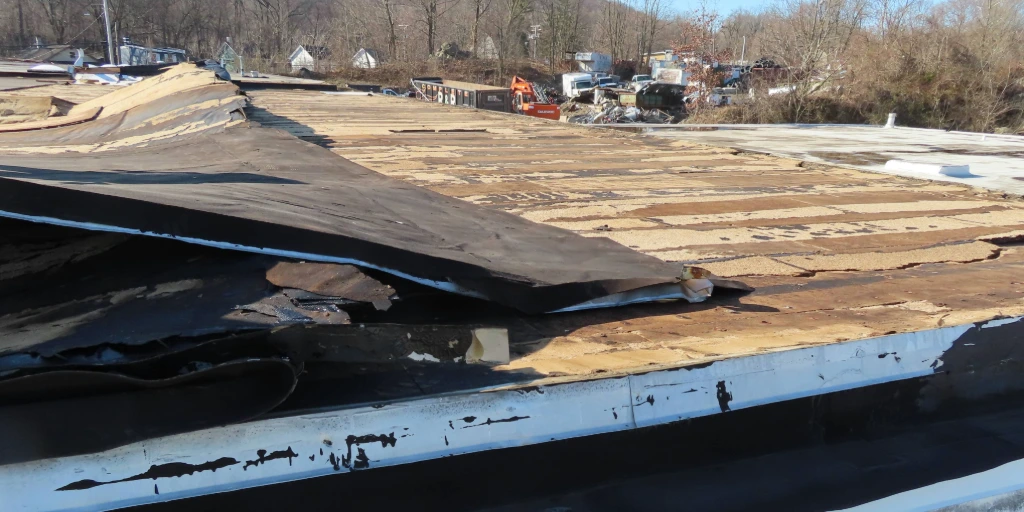
- Torn, lifted, or missing roofing membranes
- Ice dams causing water backup under roofing materials
- Structural concerns, such as sagging decking or compromised supports
- Fallen debris, trees, tools, or equipment impacting the roof
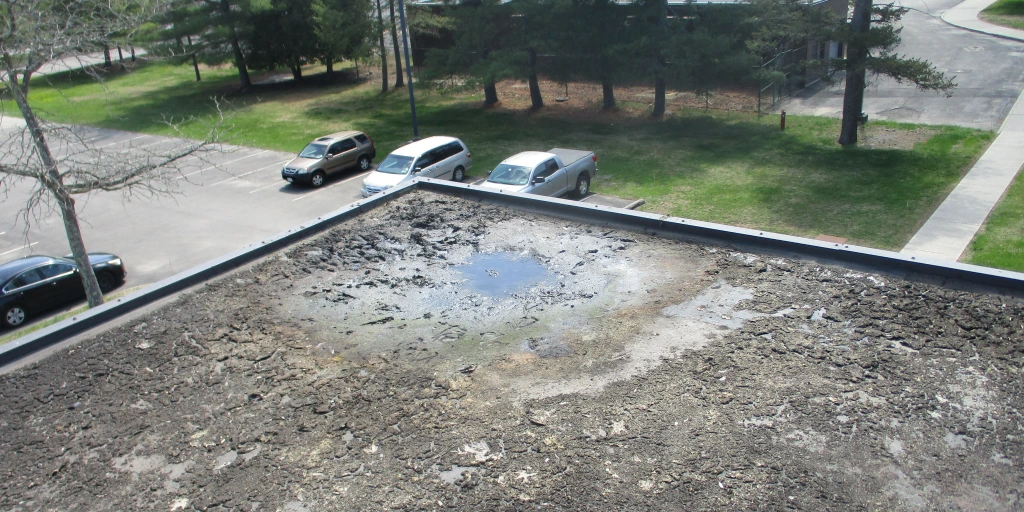
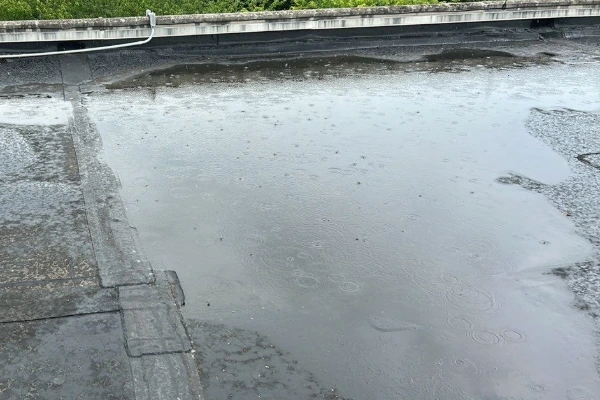
- Severe ponding water threatening membrane failure
By contrast, minor surface wear, small blisters, or isolated cracking can usually be addressed through scheduled maintenance or planned roof repair services. Knowing the difference allows property managers to communicate urgency accurately when contacting an emergency commercial roofing contractor.
Emergency Commercial Roof Response Timeline
Response speed directly affects the extent of interior damage and repair costs. Vanguard Roofing provides 24/7 emergency commercial roofing services throughout the Northeast, prioritizing calls based on severity, safety risks, and weather conditions.
During the initial call, our team gathers key details about leak location, roof type, and current conditions to assess urgency and determine the safest response approach. Weather plays a significant role—active storms, snow accumulation, or high winds may affect access and timing.
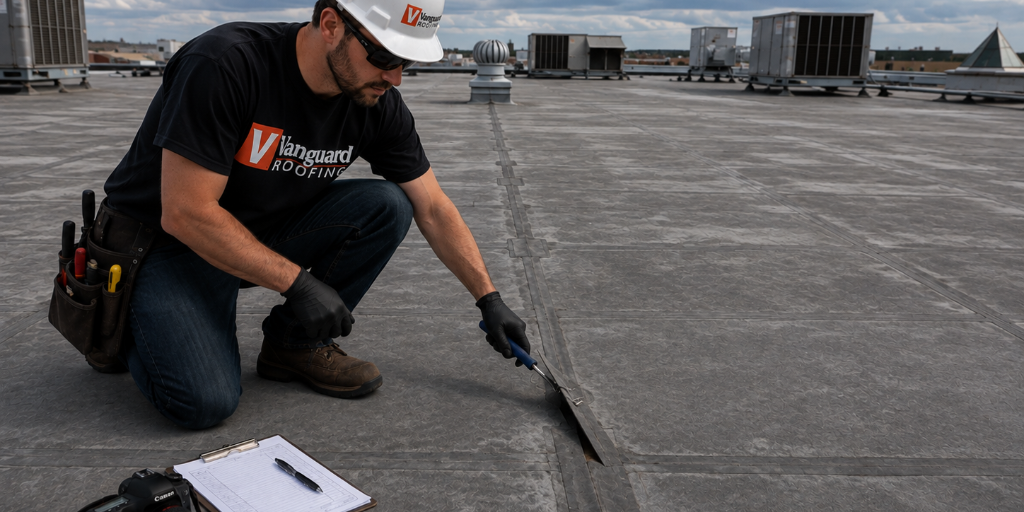
Once on site, emergency roof assessments typically take 30 to 45 minutes, allowing our technicians to identify damage sources and determine appropriate temporary protection measures when conditions permit.
What to Do Immediately When You Discover a Roof Leak
Quick action can significantly reduce secondary damage while waiting for professional help.
Recommended steps include:
- Photograph active leaks, ceiling stains, and affected areas
- Move equipment, inventory, or sensitive materials away from water
- Use buckets or tarps to control interior water spread
- Inspect from inside the building only—never access the roof during storms or icy conditions
- Notify your insurance provider and ask about emergency mitigation coverage
- Contact Vanguard Roofing with details about damage severity and location
These steps support both emergency response and future insurance documentation.
Temporary Protection Measures During Emergency Repairs
The first goal of emergency commercial roof repair is to stop active water intrusion and stabilize the roofing system. Vanguard Roofing crews arrive equipped with commercial-grade tarping systems, water diverters, emergency sealants, and temporary patching materials compatible with common flat and low-slope roofing systems.
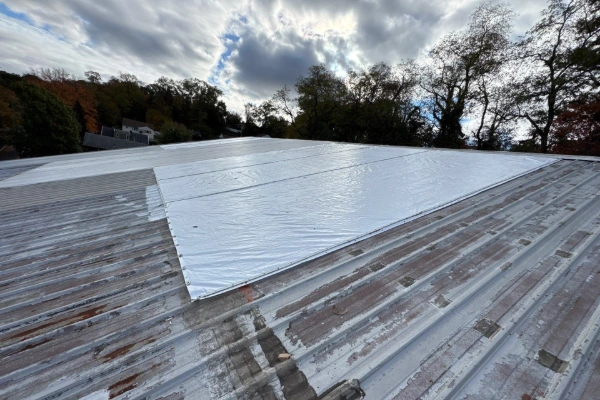
Temporary solutions vary depending on conditions:
- Heavy-duty tarps may be installed during active precipitation
- Interior water diverters
- Emergency sealants or patches may be applied during calmer weather
- Interior mitigation may be used when roof access is unsafe
Temporary repairs are designed to provide short-term protection until permanent repairs can be completed. While materials are secured to reduce movement and wind exposure, weather conditions can impact durability. Most temporary protection work is completed within one to three hours, depending on access and the extent of damage.
Emergency Roofing in Northeast Weather Conditions
Winter weather presents unique challenges for commercial roofing emergencies. Vanguard Roofing follows strict safety protocols when working in snow, ice, or freezing temperatures.
Key considerations include:
- Evaluating structural load before accessing snow-covered roofs
- Using cold-weather-rated materials for temporary repairs
- Managing ice dam conditions carefully to avoid membrane damage
- Accounting for freeze-thaw cycles that affect sealants and seams
When exterior access is unsafe, interior leak management can be used as a temporary solution until weather conditions improve. Permanent repairs may be scheduled once temperatures and safety conditions allow.
Safety Protocols and Building Access
Emergency roof repairs require coordination between roofing crews and property management teams. Interior access is often necessary to trace leaks, inspect damage, and protect affected areas.
Depending on severity:
- Temporary area closures may be required
- Equipment or occupants may need to be relocated
- Electrical or structural hazards may limit access
While many buildings can remain operational during emergency repairs, safety always comes first. Vanguard Roofing communicates clearly throughout the process to minimize disruption while protecting occupants and property.
Cost Factors and Payment Expectations
Emergency commercial roof repair costs depend on several variables, including:
- Roof type and system complexity
- Extent of damage
- Accessibility and safety conditions
- Timing (after-hours or severe weather response)
Emergency service calls may include priority response fees, while temporary mitigation costs vary by materials and scope. Permanent repair or replacement pricing is determined after a full system assessment.
Because emergency mitigation often requires immediate action, authorization for initial services is typically required. Permanent repairs are estimated separately once conditions stabilize.
Insurance Documentation and Claims Support
Accurate documentation is critical for insurance claims. Vanguard Roofing provides:
- Detailed written reports
- Photo documentation of damage and repairs
- Clear distinction between emergency damage and pre-existing conditions
- Repair recommendations for adjuster review
Property managers should retain invoices, correspondence, and photos before, during, and after repairs. Prompt emergency mitigation is often required by commercial insurance policies, and proper documentation helps support coverage decisions.
Repair vs. Replacement: Making the Right Decision
Not every emergency leads to full roof replacement. Vanguard Roofing evaluates:
- Membrane condition
- Substrate integrity
- Roof age and service history
- Frequency of previous repairs
Localized damage on otherwise sound systems can often be repaired effectively. However, older roofs that are nearing the end of their lifespan may experience repeated failures, making replacement a more cost-effective long-term solution. Our team provides transparent recommendations to support informed capital planning and decision-making.
Common Causes of Commercial Roofing Emergencies in the Northeast
Regional conditions drive many emergency scenarios, including:
- Heavy snow loads exceeding design limits
- Ice dams caused by heat loss and refreezing
- Freeze-thaw cycles opening seams and flashing
- High-wind events lifting deteriorated membranes
- HVAC or drainage failures causing ponding water
- Hurricanes or severe rainstorms
Regular inspections and preventative maintenance help identify risks before they escalate into emergencies.
Credentials, Certifications, and Manufacturer Partnerships
Vanguard Roofing maintains manufacturer certifications with Carlisle, Amrize-Duro-Last, Johns Manville, Elevate (formerly Firestone), GAF, and Silka Sarnafil, allowing us to perform warranty-compliant repairs on these systems. Our technicians receive ongoing training, and we carry full licensing and insurance coverage across our service area in the Northeast.
Selecting certified contractors is essential for maintaining warranty coverage and ensuring proper emergency repairs.
Post-Emergency Follow-Up and Permanent Solutions
Temporary repairs are only the first step. Within 24 to 48 hours of emergency service, Vanguard Roofing provides detailed proposals outlining permanent repair options, timelines, and warranty information.
Weather and material availability may impact scheduling, especially during the winter months. We monitor temporary measures and remain engaged until permanent repairs are completed and your roof system is fully restored.
Trust Vanguard Roofing for Emergency Commercial Roof Repair
Commercial roofing emergencies demand experienced professionals who understand conditions in the Northeast. With over five decades of expertise, manufacturer certifications, and 24/7 availability, Vanguard Roofing delivers dependable emergency response, honest assessments, and long-term solutions.
Contact Vanguard Roofing today for emergency commercial roof repair services—or to establish a proactive relationship before an emergency occurs.