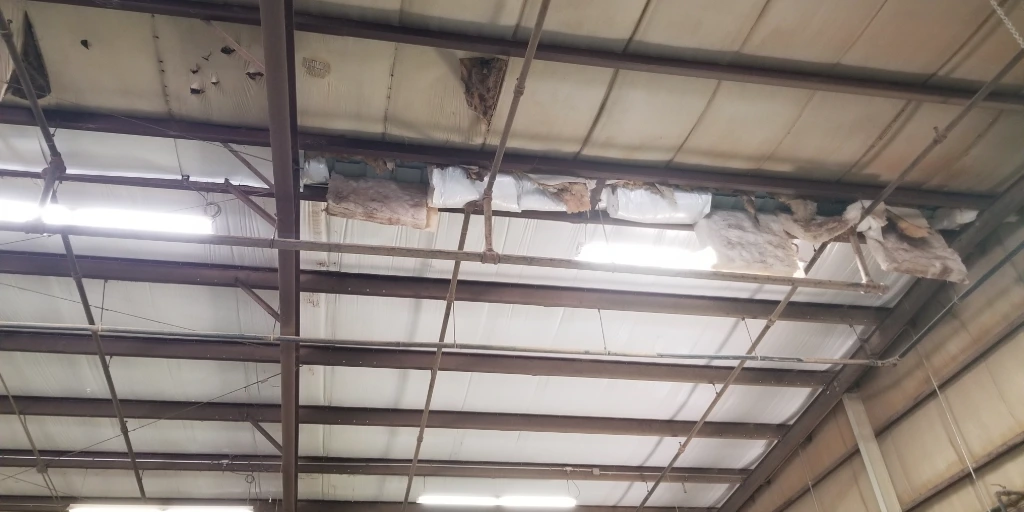
Commercial roof leaks rarely announce themselves until the damage is already done, and by then, the costs have a way of adding up fast. At Vanguard Roofing, we’ve seen what a leaking commercial roof can do to a building — and to a business. Water intrusion doesn’t just damage insulation and structural components; it disrupts operations, drives up repair costs, and creates liability concerns that are difficult to walk back. The good news is that most commercial roof leaks don’t appear without warning. They follow a pattern, and understanding the most common causes of commercial roof leaks puts you in a position to stop problems before they become expensive emergencies. Whether you own or manage a facility in New York, Connecticut, Massachusetts, or New Jersey, this guide covers what you need to know.
What Makes Commercial Roofs Vulnerable to Leaks?
Commercial roofs, particularly flat and low-slope systems, are built differently from residential roofs. Water doesn’t shed off them the same way. Instead, it sits, pools, and pushes against every seam, joint, and penetration on the surface. That design reality means commercial roofing systems are only as reliable as their weakest point. Age, installation quality, maintenance frequency, and climate all factor into how quickly vulnerabilities develop. Most commercial roof leaks can be traced to one or more of the issues below, and nearly all are manageable with the right maintenance plan.
Commercial Roof Flashing Failure
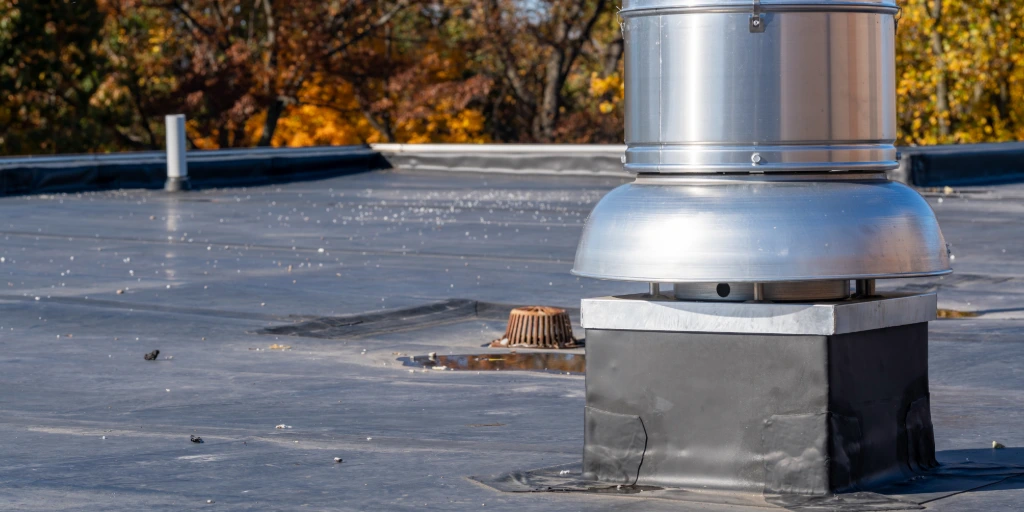
Flashing is the metal or membrane material installed around roof penetrations, such as drains, HVAC units, vents, skylights, and parapet walls. Its job is to create a watertight seal at every point where the roof surface meets another material or vertical surface. When flashing fails, water finds a direct path into the building.
Why Flashing Fails
Flashing failure is one of the leading causes of commercial roof leaks. It can happen due to poor installation, rust or corrosion on metal flashing, adhesive breakdown on membrane flashing, or physical separation caused by building movement over time. In many cases, flashing damage is visible during a routine inspection, which is why scheduled roof maintenance matters.
How to Prevent Flashing Leaks
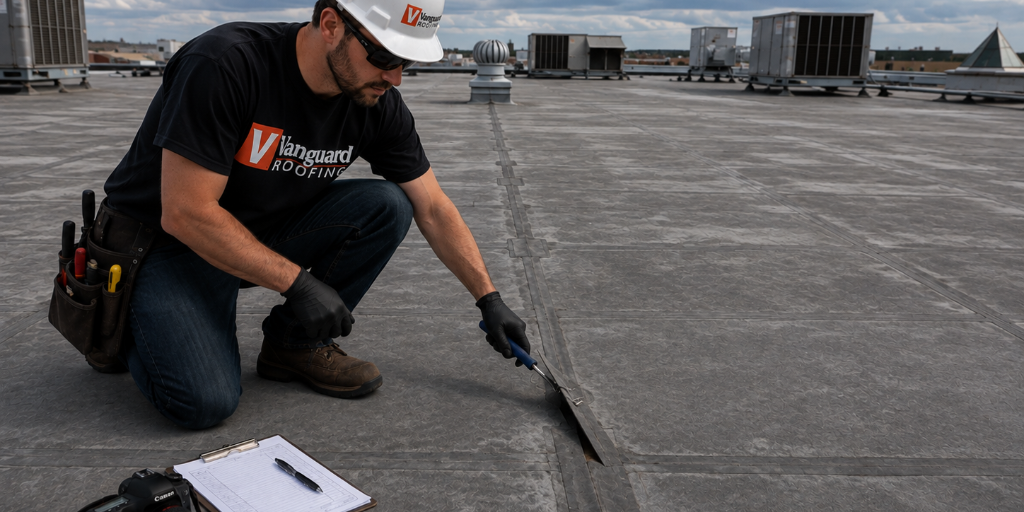
Have a qualified roofing contractor inspect all flashing points at least twice a year. Pay close attention after major storms. Resealing or replacing compromised flashing is a low-cost repair that prevents high-cost water damage.
Ponding Water on Flat Roofs
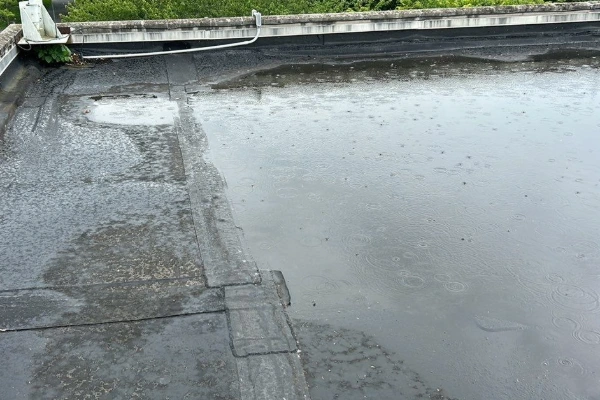
Ponding water is defined as water that remains on a flat or low-slope roof for more than 48 hours after rainfall. It’s one of the most recognized causes of flat roof leaks, and it’s common in commercial properties that haven’t been designed or maintained with proper drainage in mind.
Why Ponding Water Is a Problem
Beyond the obvious weight load that standing water places on the roof deck, persistent ponding accelerates the breakdown of roofing membranes and creates ideal conditions for algae, mold, and root intrusion. Eventually, even a well-installed membrane will give way if water repeatedly ponds in the same location.
Solving Drainage Problems
A qualified commercial roofing contractor can evaluate your roof’s drainage plan and recommend solutions — including additional drains, tapered insulation, or crickets — to redirect water and eliminate ponding.
Roof Membrane Damage
The membrane is your commercial roof’s primary line of defense against water. On flat and low-slope systems, single-ply membranes such as TPO, EPDM, and PVC are widely used. Roof membrane damage compromises that barrier and is a direct cause of leaks.
Common Sources of Membrane Damage
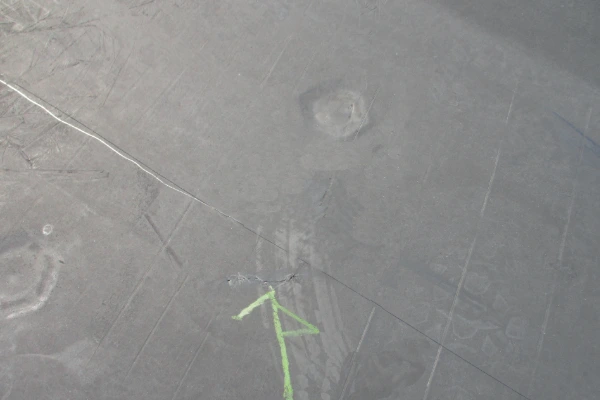
Membrane damage can result from UV exposure, thermal expansion and contraction, improper installation, and punctures from debris or equipment. Blistering, cracking, and open seams are all signs that the membrane has been compromised and needs attention.
Does Foot Traffic Damage Commercial Roofing Membranes?
Yes, and it’s a frequently overlooked issue. Rooftop HVAC servicing, equipment installation, and general maintenance, along with foot traffic, all create opportunities for membrane punctures and abrasion. Installing flat roof walking pads in high-traffic areas significantly reduces membrane wear and extends the system’s life.
Aging Roofing Materials
No roofing system lasts forever. As materials age, they lose flexibility, adhesion, and the structural integrity needed to keep water out. Understanding how aging roofing materials contribute to leaks helps building owners plan ahead rather than react.
What Aging Looks Like
On flat roofs, aging often shows up as widespread membrane cracking, granule loss on modified bitumen systems, dried-out or brittle flashings, and recurring leak points that seem to shift over time. When repairs become frequent and patching is no longer cost-effective, roof replacement becomes the more practical path forward.
Extending Roof Life With Maintenance and Coatings
You can extend the life of an aging roof system with a proactive commercial roof maintenance plan. Reflective coatings are another option. They seal minor surface imperfections, reduce UV damage, and can improve energy performance at the same time.
Freeze-Thaw Cycles in the Northeast
Building owners and facility managers in Connecticut, Massachusetts, New York, and New Jersey deal with a climate that puts roofs through repeated cycles of freezing and thawing each winter. This is a real and consistent threat to commercial roofing systems in the region.
How Freeze-Thaw Damage Leads to Leaks
Water that infiltrates small cracks or seams expands when it freezes, widening those gaps incrementally with each cycle. Over a single winter, this process can turn a minor seam separation into a significant leak point. Low-slope roofs are especially susceptible because they hold moisture longer than steep-slope systems.
Snow and Ice Removal
Allowing heavy snow and ice to accumulate on a commercial roof compounds the problem. The added weight stresses the deck, and melting snow can back up behind ice dams at drainage points. Scheduled commercial roof snow removal is a practical step that protects the structure and the membrane during the winter months.
Protecting Your Commercial Roof Year-Round
Most commercial roof leaks are preventable. The pattern is consistent: a small issue goes uninspected, minor damage progresses without intervention, and what could have been a modest repair becomes a major expense. A structured roof maintenance plan with scheduled inspections in the spring and fall catches problems while they’re still manageable.
Vanguard Roofing has been delivering commercial and industrial roofing services since 1972. Our team works directly with building owners and facility managers across New York, Connecticut, Massachusetts, and New Jersey to identify vulnerabilities, recommend the right solutions, and get the work done right the first time.
Contact Vanguard Roofing today to schedule an inspection or request a free roof quote.